
Why prioritising balance becomes essential as we age | With Paula Malloy
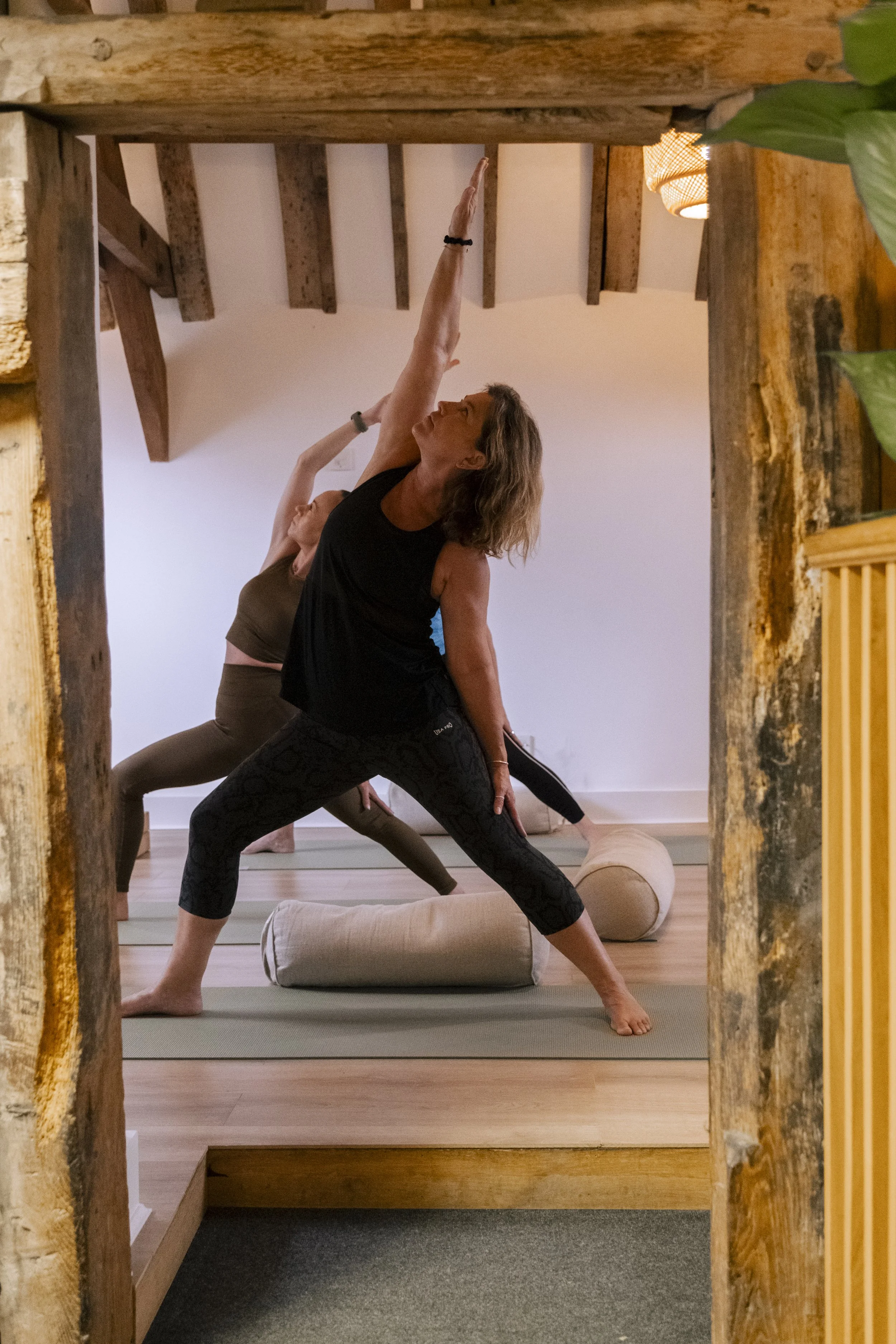
In the current five-week Slow Down Yoga course, Paula is taking a dive deep into the art of balance, exploring practical techniques to help you move with confidence, stability, and ease.
Why having good physical balance is the key to independence as we grow older!
Doing the work now, for our future selves, so living a life that's free of using walking aids, or people to help us up the stairs, and being able to walk with confidence on any seasonal surface, is the key to independence as we get older.
We all know someone who’s had a fall.
A single fall can take away more than balance, it can take someone's confidence and independence. Suddenly, simple activities like going for a walk or visiting the supermarket feel risky. Fear grows, and life shrinks. But with the right support and learning, the ability to balance well can continue to grow into our older years.
From fell over to ‘fall’
At some point in life, the words we use change, from casually saying someone “fell over” to the more serious, alarming “they had a fall.” It starts with small wobbles while walking or standing, until a shoulder, wrist, or hip bears the cost. Falling in your 20s might earn a laugh, but falling in your 60s & 70s can be devastating, shaking bones and confidence alike. Embracing your balance work today is an investment in your 80-year-old confident and independence self.
Great physical balance is far more than standing on one leg
(though that’s a perfect place to start). True balance trains your whole body and your brain to respond when life or walking isn’t fixed or predictable. It’s what prepares you for those everyday slips or stumbles, so if you ever lose your footing, your body instinctively knows how to react, softening a fall or keeping you upright and steady on your own two feet. Balance isn’t just skill, it’s freedom, confidence, and safety rolled into one.
True physical balance invites us to cultivate emotional equilibrium as well.
It asks us to tune in to ourselves, notice our moods, acknowledge what we’re carrying, and gently release the tension that weighs us down. Balance teaches the mind to find clarity and spaciousness, moving away from rumination, stress, and haste. To experience real balance is to align body, mind, and emotions, living in harmony with life.
Hey, here's some interesting facts about balancing
Key components in balancing well
The vestibular system and the visual system work together by sending signals from the eye muscles to the balance organs in the inner ear.
Vestibular system (Hearing)
Vestibular system, (apparatus of the inner ear involved in balance) is a sensory system that is responsible for providing our brain with information about motion, head position, and our orientation, allowing rapid compensatory movements in response to both self-induced, and external movements, especially when we're needing to balance
Proprioceptive system (Feeling)
Sensory receptors in your muscles, joints, ligaments and skin help tell your brain where your body is in space. These receptors, such as those on the bottom of your feet or along your back, are sensitive to pressure or stretching sensations. Receptors in the neck can tell the brain which way the head is turned, and receptors in the ankles can tell the brain how the body is moving.
Does balance gets worse with age?
As we age, we ‘can’ experience impairments in these three systems above, that keep us ‘in balance’. These impairments, if combined with reduced muscle strength and flexibility, ‘can’ make older adults more prone to falls, its often a case of use it, or lose it!!!!!!!
You can find Paula at The Oak House for her next yoga courses below ;
Beginners Yoga – 10 week course (Wednesdays, 19:30)
Slow Down Yoga – 5 week course (Mondays, 19:30)
Portraits by @duffys_photos
